A new identity, then a new power
A queen on a modern chessboard seems inevitable: she stands beside the king, and her movement combines the lines of a rook with those of a bishop. Yet her name, appearance, and power did not arrive together. A medieval piece can be unmistakably a queen without having the reach that a player now expects.
The Metropolitan Museum of Art describes European queens gradually replacing the viziers of the Islamic and Persian chess tradition. Its thirteenth-century Scandinavian queen is mounted on a horse and surrounded by attendants. The object makes the royal identity visible; it does not, by itself, tell us how far its owner was allowed to move it.
Sources: The Met · Queen Chess Piece
A crown did not mean unlimited reach
In the medieval form discussed by Met curator Barbara Drake Boehm, the queen initially moved only to a neighboring diagonal square. Regional rules could add exceptions, including an expanded first move. There was no single timeless set of medieval rules that can simply be substituted for today's rulebook.
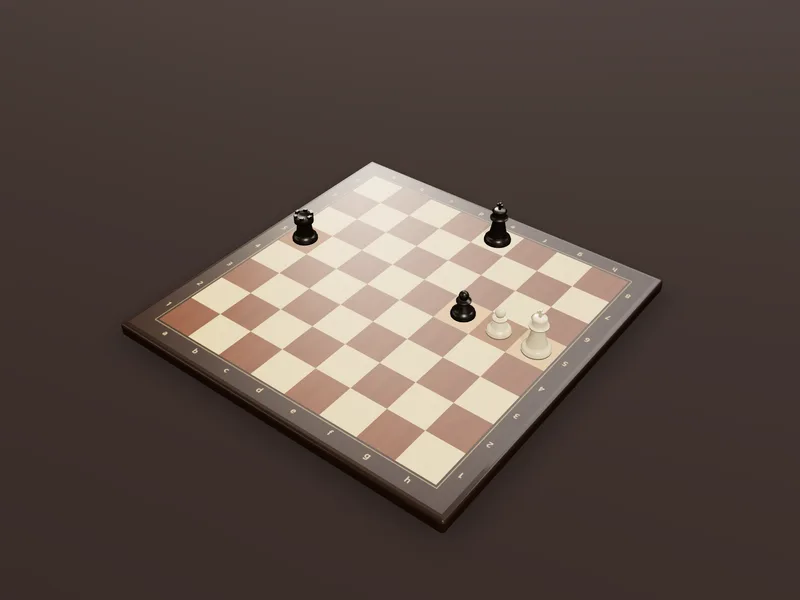
Consider just the basic one-step diagonal move on an otherwise empty board. From d4 it reaches c3, c5, e3, and e5. Repeating that movement never changes the color of the square the piece occupies. This is a geometric consequence of the move: both the file and rank change together by one.
Sources: The Met · All Aboard!
The late fifteenth-century transformation
The University of Michigan Library's discussion of Marilyn Yalom's Birth of the Chess Queen places the emergence of the queen's modern power near the end of the fifteenth century. It describes Spanish sources distinguishing older play from a new game with a far-ranging queen. The same account connects the circulation of printed chess manuals with the spread of the new rules.
Yalom connects the change to the cultural influence of powerful queens, including Isabella of Castile. That is a historical interpretation, not a surviving rule-change announcement proving that a particular ruler invented the move. It is useful to distinguish the evidence for a change in play from an explanation of why that change appealed to people.
Sources: University of Michigan Library · Birth of the Chess Queen
Read the objects and the rules together
- Medieval Europe
The queen takes her place
Surviving royal figures show a queen's identity before the modern move became established.
- 13th century
A queen on horseback
The Met's Scandinavian piece offers a tangible example of that identity.
- Late 15th century
A much longer reach
Accounts of the newer game describe the queen's expanded movement.
- Today
Ranks, files, and diagonals
The modern queen moves along any of these lines, with intervening pieces stopping her path.
A carved figure answers questions about representation: clothing, posture, material, and the scene its maker chose. A rule text answers a different question: what players could actually do. Reading one as if it automatically supplied the other can flatten centuries of change into a misleading single origin story.
Sources: The Met · Queen Chess Piece · University of Michigan Library · Birth of the Chess Queen · FIDE Laws · The modern queen
What the longer move makes possible
Try a purely geometric comparison. A queen on d4 on an otherwise empty board has 27 destination squares: seven along its rank, seven along its file, and thirteen along the diagonals. This count describes reach, not legal moves in a complete chess position. Kings, friendly pieces, and threats change what is actually available.
That reach explains a familiar practical effect. An opened diagonal can give the queen access to a distant target immediately. A short-range piece would need a chain of moves to approach it. A queen can also change square color by moving along a rank or file, avoiding the permanent color restriction of a piece that only steps diagonally.
Power still depends on access. Place a friendly pawn on e5 and the queen on d4 cannot continue through it toward f6, g7, or h8. The dramatic change is not an ability to ignore obstacles. It is the ability to use a clear line all at once. That distinction is why pawn breaks and open files matter so much in a queen attack.
Sources: FIDE Laws · The modern queen
Look at the queen differently
The next time you set out the pieces, separate three questions: who does this figure represent, how is it made, and what is it allowed to do? Chess history becomes clearer when those questions stay distinct. At the board, the corresponding habit is just as useful: admire the queen's reach, then check which of her lines are actually open.
Sources & further reading
- The Met · Queen Chess Piece
The thirteenth-century Scandinavian queen and the gradual replacement of the vizier in European sets.
- The Met · All Aboard!
Curator Barbara Drake Boehm explains medieval movements and regional exceptions.
- University of Michigan Library · Birth of the Chess Queen
Vicki J. Kondelik's discussion of Marilyn Yalom's historical argument; the causal interpretation is attributed in the article.
- FIDE Laws · The modern queen
Articles 3.4 and 3.5 define the queen's directions and the effect of intervening pieces.
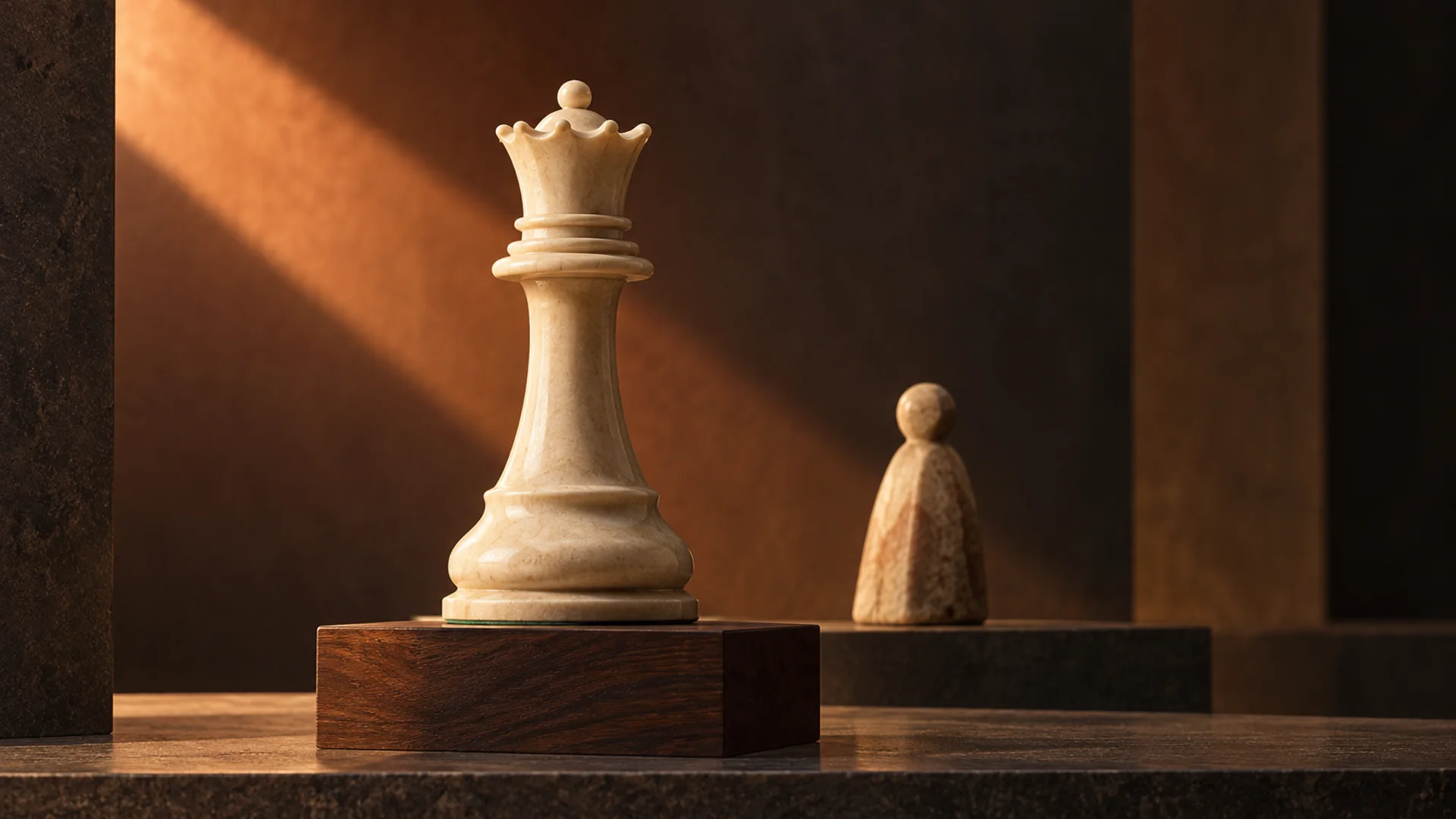
Prepared with AI assistance. Historical claims are linked to their sources; the lead image is an original illustration. This preview is awaiting independent editorial review.
Take it to the board
Look closer at the pieces
Explore the site's sculpted chess set in wood, marble, and metal.