

Interactive lesson
Foundations
The rules of chess
Get to know the board, meet all six pieces, and make your very first move.
6 pieces to explore
Build confidence, one small lesson at a time.
Your learning journey
Beginner · 4 lessons
Don’t just read the move. See it.
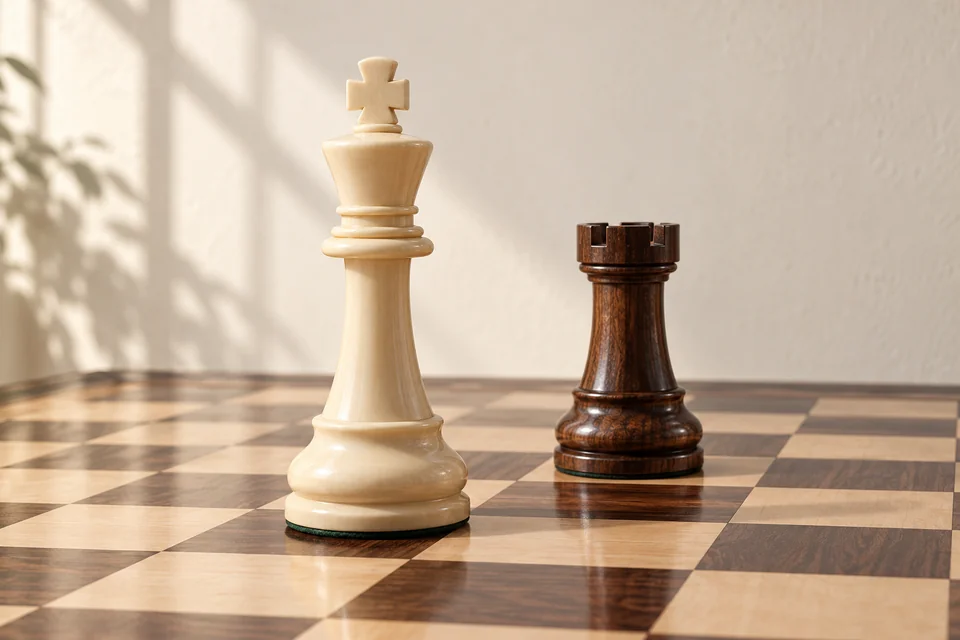
Watch the king and rook move together. Pause, turn the board, and see the idea from every angle.
Step into the cinemaA little discovery
The knight does things differently. Two squares in one direction, then one to the side. A little leap. A whole new possibility.
Click a square · or use arrow keys and Enter
Follow a spark of curiosity
A move to understand. An idea to try.
Find something that speaks to you.
48 lessons
Get to know the board, meet all six pieces, and make your very first move.
Castling moves the king two squares toward a rook and jumps that rook to the square the king crossed, in a single move. It is legal only if neither piece has moved, nothing stands between them, and the king is not in check, does not pass through an attacked square, and does not land in check.
Centre, development and the pressure on f7, move by move.
En passant lets a pawn capture an enemy pawn that has just moved two squares forward and landed beside it. The capturing pawn moves diagonally to the square the enemy pawn skipped, and the right lasts for that one move only.
The first mate every player should know. Shrink the king's box with the queen, then bring your own king up to finish.
The back-rank mate and the smothered mate, seen from the king's side of the board.
The language of chess, simply explained.
Chess glossary02 / Keep exploringPut your pattern recognition to work.
Solve a puzzle03 / Keep exploringBring what you’ve learned to a real game.
Play a gameTake your time. Find your move.